
Frankman Guides · Towing
Can My Truck Tow It? Campers, Boats, Fish Houses and Horse Trailers in South Dakota
The short answer
A half-ton truck's tow rating covers many campers, boats and fish houses, but payload usually runs out before the tow rating does.
Tongue weight counts against payload: about 10 to 15 percent of a loaded bumper-pull trailer, and 15 to 25 percent for a fifth wheel or gooseneck.
Your truck's real payload is printed on the driver's door-jamb sticker as the most people and cargo it should ever carry.
Tell us your trailer's loaded weight and we'll confirm a specific truck's ratings by VIN before you buy.
Key facts
- Ford and Chevrolet maximum trailer ratings assume only a 150-lb driver and a 150-lb passenger, no cargo, and a 10 percent tongue weight (15 percent for a fifth wheel).
- Ford rates the 2026 F-150 to tow up to 13,500 lb, but its highest 4x4 payload is 2,175 lb, and Ford notes the two maximums may not come on the same truck.
- South Dakota requires brakes on all wheels of a trailer unless it weighs 3,000 lb or less and no more than 40 percent of the tow vehicle (SDCL 32-18-3).
- South Dakota requires safety chains or cables, in addition to the hitch, on trailers towed faster than 20 mph (SDCL 32-19-9).
- Our service center installs trailer hitches.
The four numbers that decide it
- GVWR (gross vehicle weight rating): the most the truck itself may weigh, loaded with people, cargo and the trailer's tongue weight.
- GCWR (gross combined weight rating): the most the truck and the loaded trailer may weigh together, including everything in both.
- Payload: the people and cargo the truck can carry. Ford defines it as GVWR minus base curb weight, and tongue weight counts as cargo.
- Tongue weight: how hard the trailer presses down on the hitch. Chevrolet calls for 10 to 15 percent of the loaded trailer's weight on a conventional trailer and at least 15 percent on a fifth wheel or gooseneck. GM has published a 15 to 25 percent range for those.
Too little tongue weight can make a trailer sway; too much lightens the front wheels and hurts steering and braking. Boat trailers can differ, so use the trailer manual's number.
Why payload runs out before the tow rating
The big tow number in the brochure is figured on a nearly empty truck. Ford and Chevrolet both assume a 150-lb driver, a 150-lb passenger, no cargo and the lightest tongue weight in the range.
Real trips add your family, the dog, a cooler and the hitch, and all of it comes out of payload along with the tongue weight. So do add-ons like a heavy bumper or toolbox.
Ford's own numbers show the gap. A 2026 F-150 is rated up to 13,500 lb of trailer, which puts 1,350 lb on the hitch at 10 percent. The best 4x4 payload Ford lists is 2,175 lb, leaving about 825 lb for everyone and everything else, even in the best case.
Most people ask me about the tow rating. I ask what the camper weighs loaded and what the door sticker says. That's where the real answer is.
Taher Alyamany, General Sales Manager
Where to find your truck's ratings
- Tire and loading placard, driver's door jamb: federal rules require it to say, "The combined weight of occupants and cargo should never exceed" a set number of pounds. That is the payload for that truck as built.
- Certification label, same area: GVWR and axle ratings. On a Ford it also shows an axle code that matches the towing chart.
- Trailering label: Chevrolet's 2020 guide describes a door-jamb label on Silverado 1500 and HD trucks listing GVWR, GCWR, rear axle rating, maximum payload, maximum tongue weight and curb weight.
- Owner's manual and the maker's towing guide: the trailer rating and GCWR by model year, engine, cab, bed and axle ratio.
Example: a 30-ft travel trailer behind a half-ton
These are example numbers to show the math, not specs for a real trailer or truck.
- Trailer, loaded for the trip: 7,000 lb
- Tongue weight at 10 to 15 percent: 700 to 1,050 lb
- Two adults and two kids: 550 lb
- Cooler, firewood and bikes in the bed: 200 lb
- Total against payload: 1,450 to 1,800 lb, plus the hitch
That trailer is inside the tow rating of every 2026 F-150 engine Ford lists. But a truck with a 1,600-lb door sticker would be over its payload at the heavy end. Your options: a truck with more payload, a lighter trailer or load, or a three-quarter-ton.
Hitch setup matters too. Ford's towing guide says not to tow more than 5,000 lb with an F-150 without a weight-distribution hitch. We'll confirm for the specific VIN.
Example: a fishing boat
Example numbers: a boat, motor, fuel and gear on its trailer at 3,200 lb puts 320 to 480 lb on the hitch at 10 to 15 percent.
That rarely strains payload, and many midsize trucks and SUVs can handle it. Ford rates the 2026 Ranger to tow up to 7,500 lb, for example. The South Dakota detail: at 3,200 lb, the trailer is over the state's 3,000-lb brake line, so it needs brakes on all wheels. On a wet, slick ramp, 4WD and good tires help. We'll confirm for the specific VIN.
Example: an ice-fishing wheelhouse
Example numbers: a wheelhouse loaded at 5,000 lb puts 500 to 750 lb on the hitch. Add two anglers at 350 lb and 250 lb of augers, heaters and sleds in the bed, and you're at 1,100 to 1,350 lb against payload. Many half-tons have room for that. Check the sticker.
A fish house is a tall box, and Chevrolet's guide lists crosswinds as a cause of trailer sway. Check SD511 for wind and road conditions on I-90 and I-29 before you leave.
This guide stops at the shore. We never advise driving on lake ice. Follow South Dakota Game, Fish and Parks and local ice-safety guidance, and check conditions yourself every trip. We'll confirm the truck for the specific VIN.
Example: a 2-horse or 3-horse trailer
Example numbers: a 3-horse gooseneck loaded at 10,000 lb puts 1,500 to 2,500 lb on the bed at 15 to 25 percent. Add a driver, a passenger, tack and hay, and you land around 2,000 to 3,000 lb against payload.
That can top the best F-150 4x4 payload Ford lists, which is why many gooseneck owners end up in a three-quarter-ton or one-ton. Our used diesel truck guide covers those trucks.
A 2-horse bumper-pull loaded at 6,000 lb puts 600 to 900 lb on the hitch, which a properly equipped half-ton may carry. Weigh the loaded trailer at a certified scale first. We'll confirm for the specific VIN.
South Dakota trailer rules worth knowing
- Brakes: trailers made or sold in South Dakota need brakes on all wheels (SDCL 32-18-1 and 32-18-2). The exception is a trailer of 3,000 lb or less gross weight that weighs no more than 40 percent of the tow vehicle, and the combination still has to stop as the law requires (SDCL 32-18-3).
- Safety chains: any trailer towed faster than 20 mph needs safety chains, cables or an equivalent device in addition to the hitch (SDCL 32-19-9). Slack only enough to turn, strong enough to control the trailer, and rigged to keep the tongue off the road if the hitch fails (SDCL 32-19-10).
- Lights: trailers need rear tail lamps (SDCL 32-17-8).
This is a plain-language summary, not legal advice. Laws change, and other states set their own rules. Ford also recommends a separate brake system for any trailer over 1,500 lb loaded.
Hitches and the right truck
Our service center installs trailer hitches. When you book, ask what wiring and brake controller your trailer needs. A full-size SUV like a Tahoe, Expedition or Wagoneer can make sense for a boat or small camper with the family inside. The same payload math applies.
If you're on the edge, I'd rather put you in more truck than you need than have you fighting a crosswind on I-90 with too much trailer.
Taher Alyamany, General Sales Manager
Hauling in the bed instead? See our truck bed size guide.
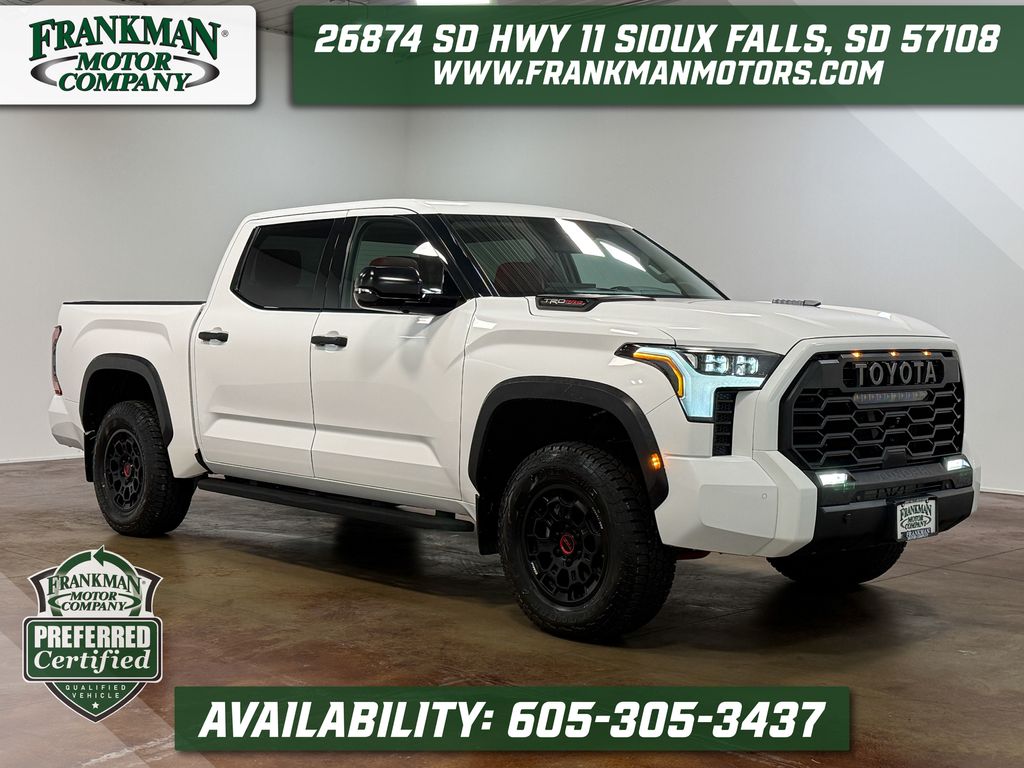
Pickups in stock now
47 trucks in stock at Frankman Motor Company as of November 12, 2026 (showing the newest 24).

 2026 Jeep Gladiator Mojave$43,990


 2024 Nissan Frontier PRO-4X$31,832


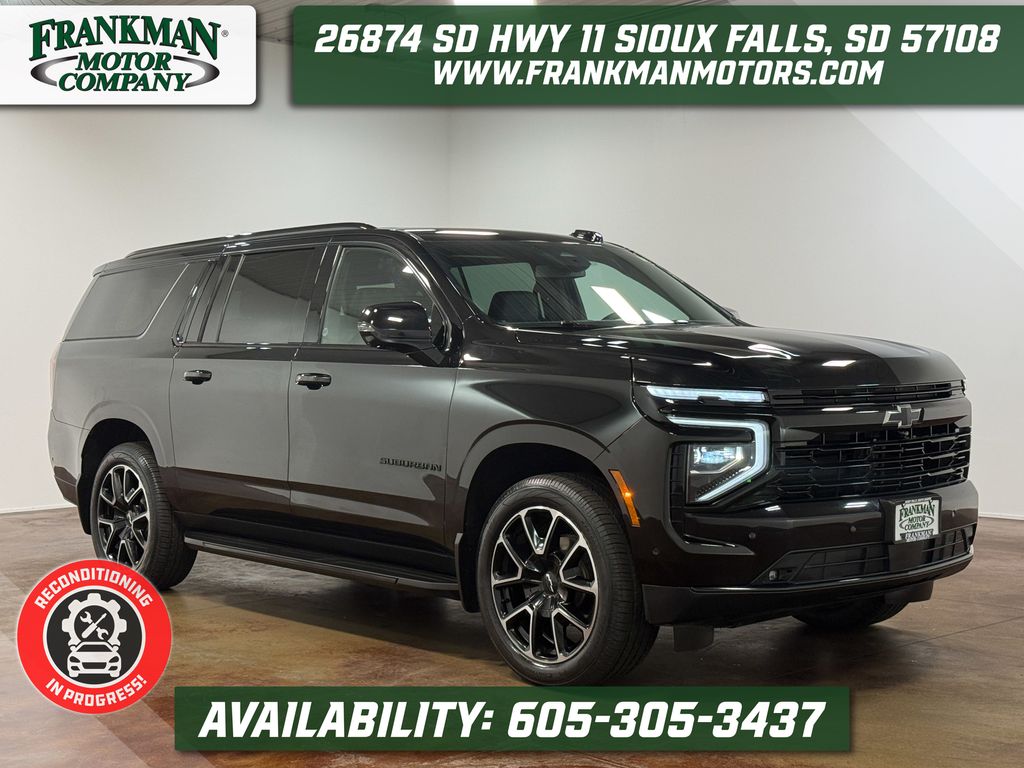
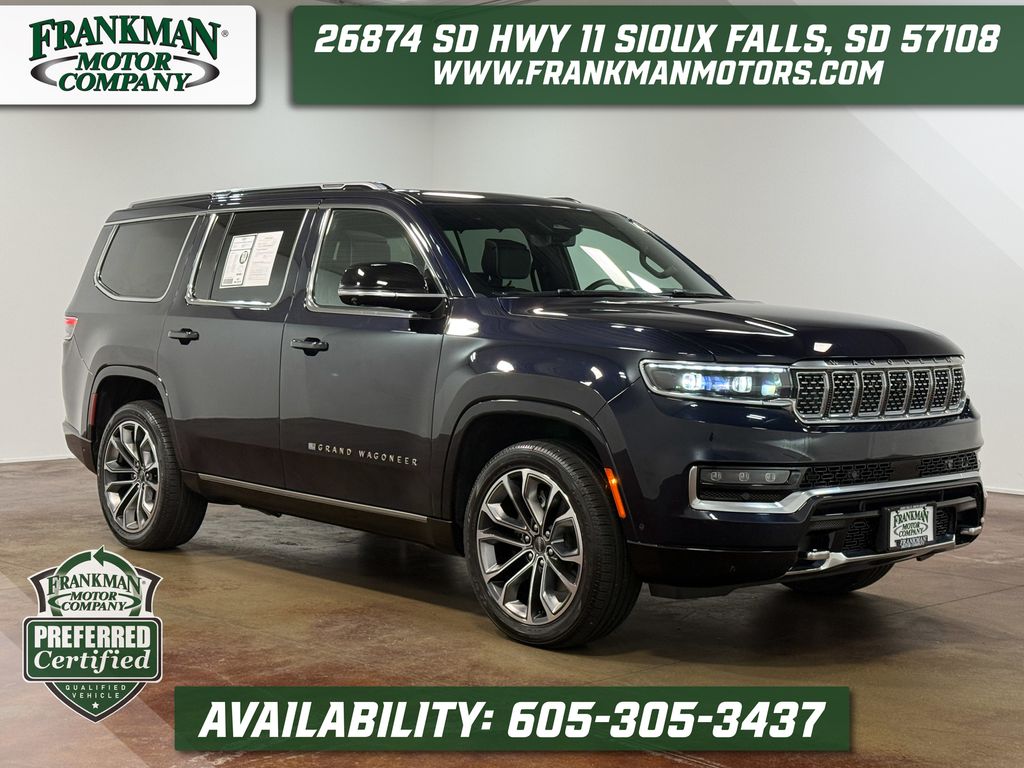
Full-size SUVs in stock now
25 vehicles in stock at Frankman Motor Company as of November 12, 2026 (showing the newest 12).






Next steps
Questions shoppers ask
Can a half-ton truck pull a 30-ft camper?
Often, by tow rating. Payload is usually the limit: the trailer's tongue weight plus your family and gear must fit under the payload on the door-jamb sticker. Send us the trailer's loaded weight and we'll check a specific truck by VIN.
Where do I find my truck's tow rating?
The owner's manual and the maker's towing guide list it by model year, engine, cab and axle ratio. The door-jamb labels show payload and GVWR. We'll confirm the numbers for any truck on our lot by VIN.
How much tongue weight should a trailer have?
About 10 to 15 percent of the loaded trailer's weight for a bumper-pull trailer, and 15 to 25 percent for a fifth wheel or gooseneck. Boat trailers can differ, so follow the trailer maker's number.
Does South Dakota require trailer brakes?
Yes, on all wheels, except trailers of 3,000 lb or less gross weight that weigh no more than 40 percent of the tow vehicle (SDCL 32-18-3). Check the current law before you tow.
What truck do I need for an ice-fishing wheelhouse?
Weigh the house loaded and run the payload math, since many half-tons can handle one. Getting it to the lake is a towing question. Going on the ice is not, so follow local ice-safety guidance and check conditions every trip.
Do you install trailer hitches?
Yes, our service center installs trailer hitches. Call service at (605) 250-7474 or book online.